Case Study
Unlocking conversion with a trust feature built on unused data
I found a way to reuse data the business already had, won users' trust at the last step, and unlocked growth in the middle of a travel downturn.

New account creations, turning anonymous visitors into a trackable, remarketable audience

of people who unlocked the feature were convinced enough to book the trip
What I walked into
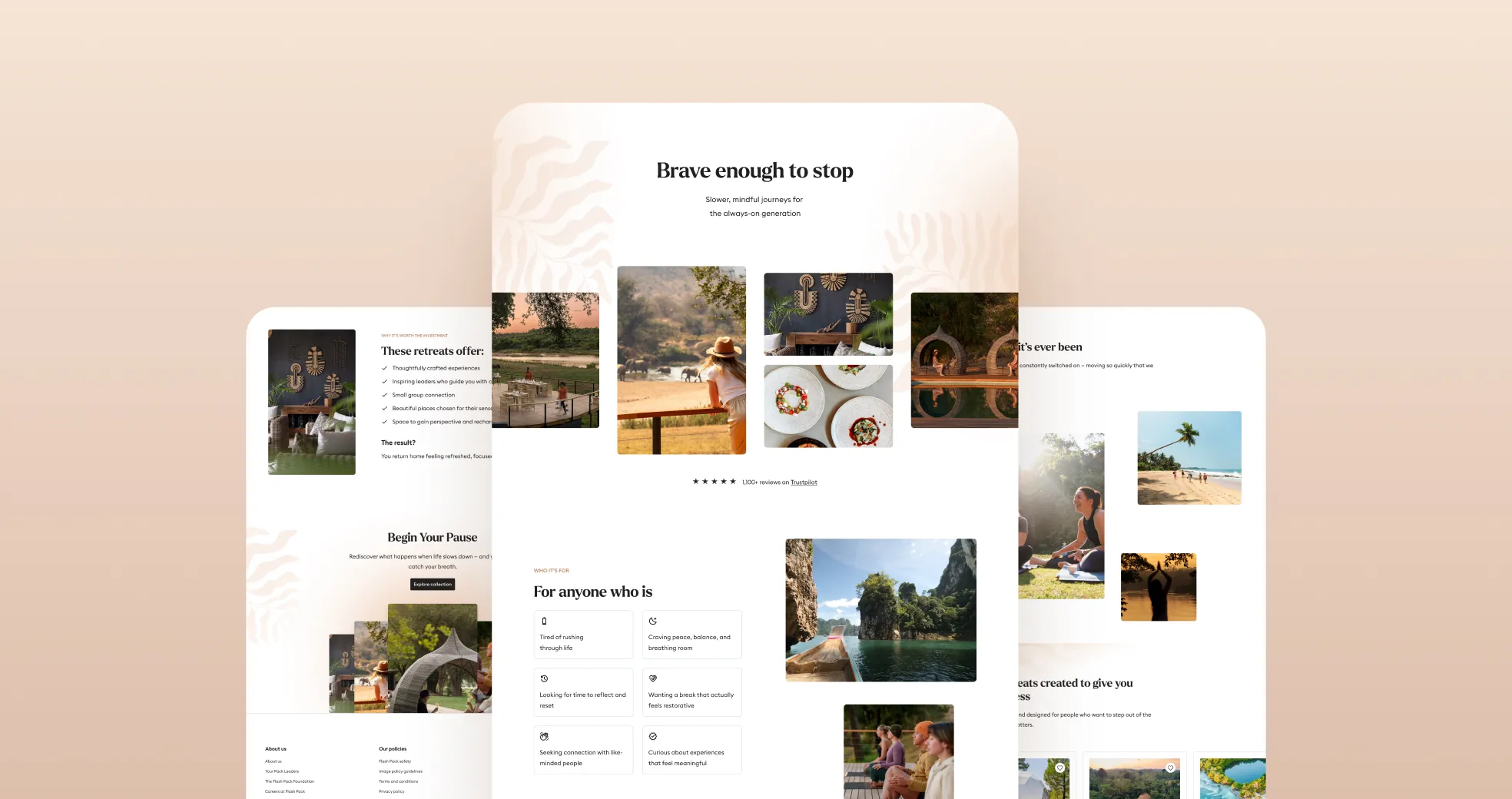
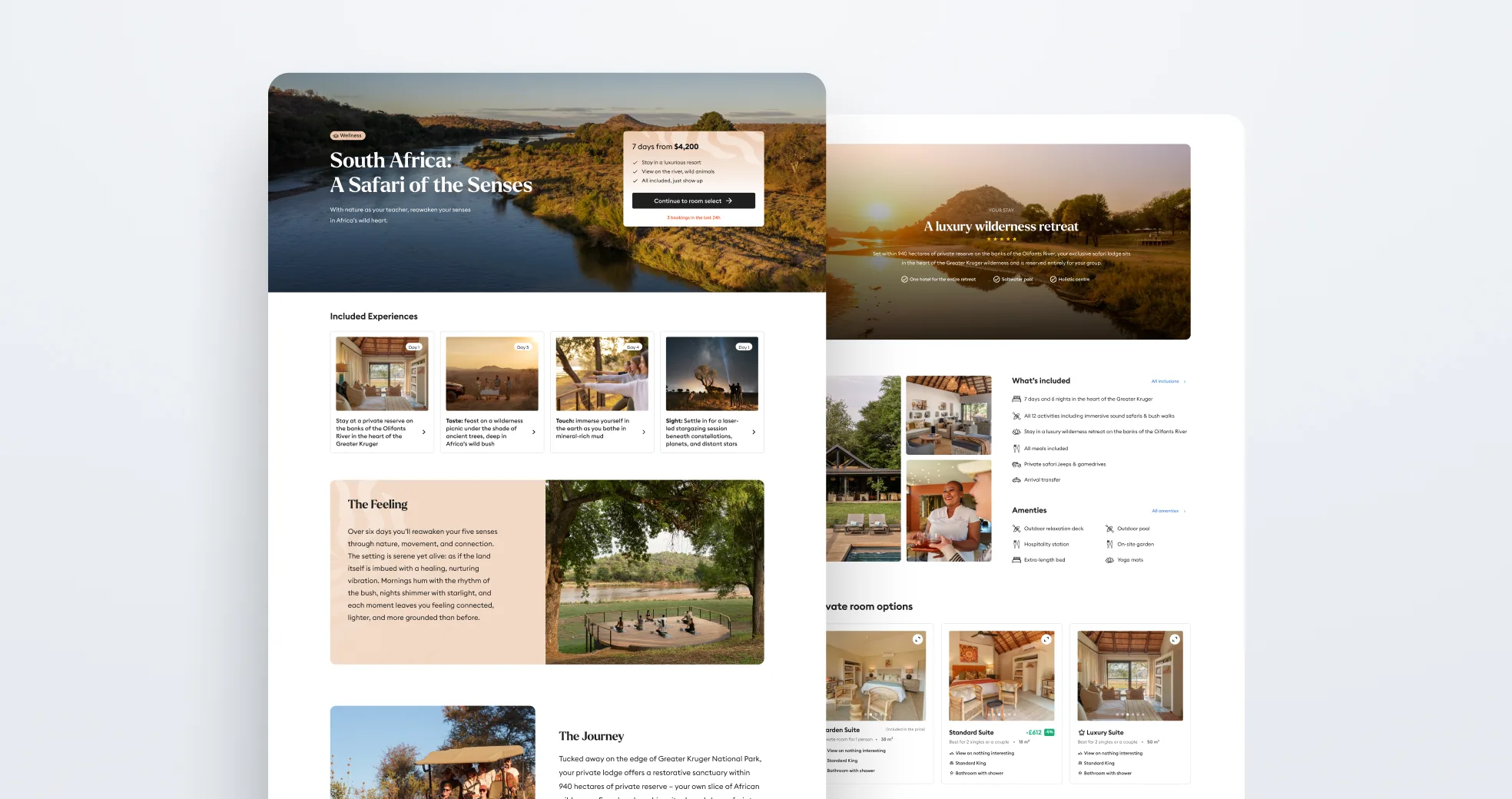
Flash Pack sells premium group adventure trips for solo travelers. The kind you book once a year and think hard about first. Every date carried a different mix of people, rooms defaulted to twin-share, and on any trip about 95% of the group had never met. You weren't buying a holiday. You were buying your way into a room and a week with strangers.
People arrived with real intent, hesitated at the last step, and quietly left. All of it during a difficult stretch for the travel economy, when every point counted.
What I found
What made it invisible: nobody had named it. Not us, not competitors, not even customers. The whole category sold group trips as a bare calendar, and everyone had normalized it so completely they couldn't put the gap into words.
Through research, I found the real blocker was trust. And the proof was behavioral. Before booking, people went to live chat to ask who'd booked, the gender split, the nationality mix, the average age. They were hand-running a feature that didn't exist. One chat at a time.
The call
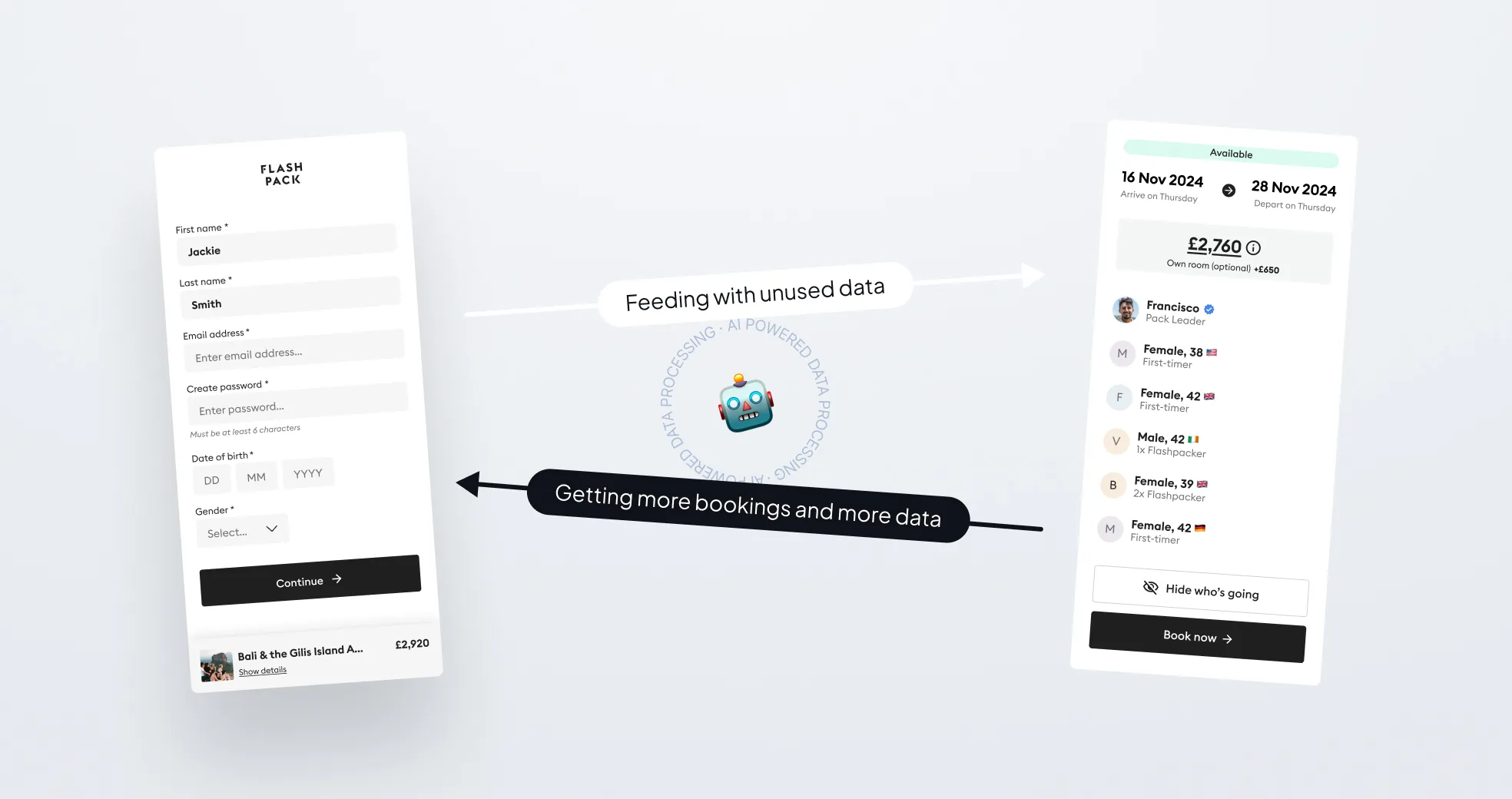
The data was already in the building. Checkout collected every traveler's nationality, age, and gender just to book their hotels, so the product already knew who was on each date. Nobody had thought to show it back.
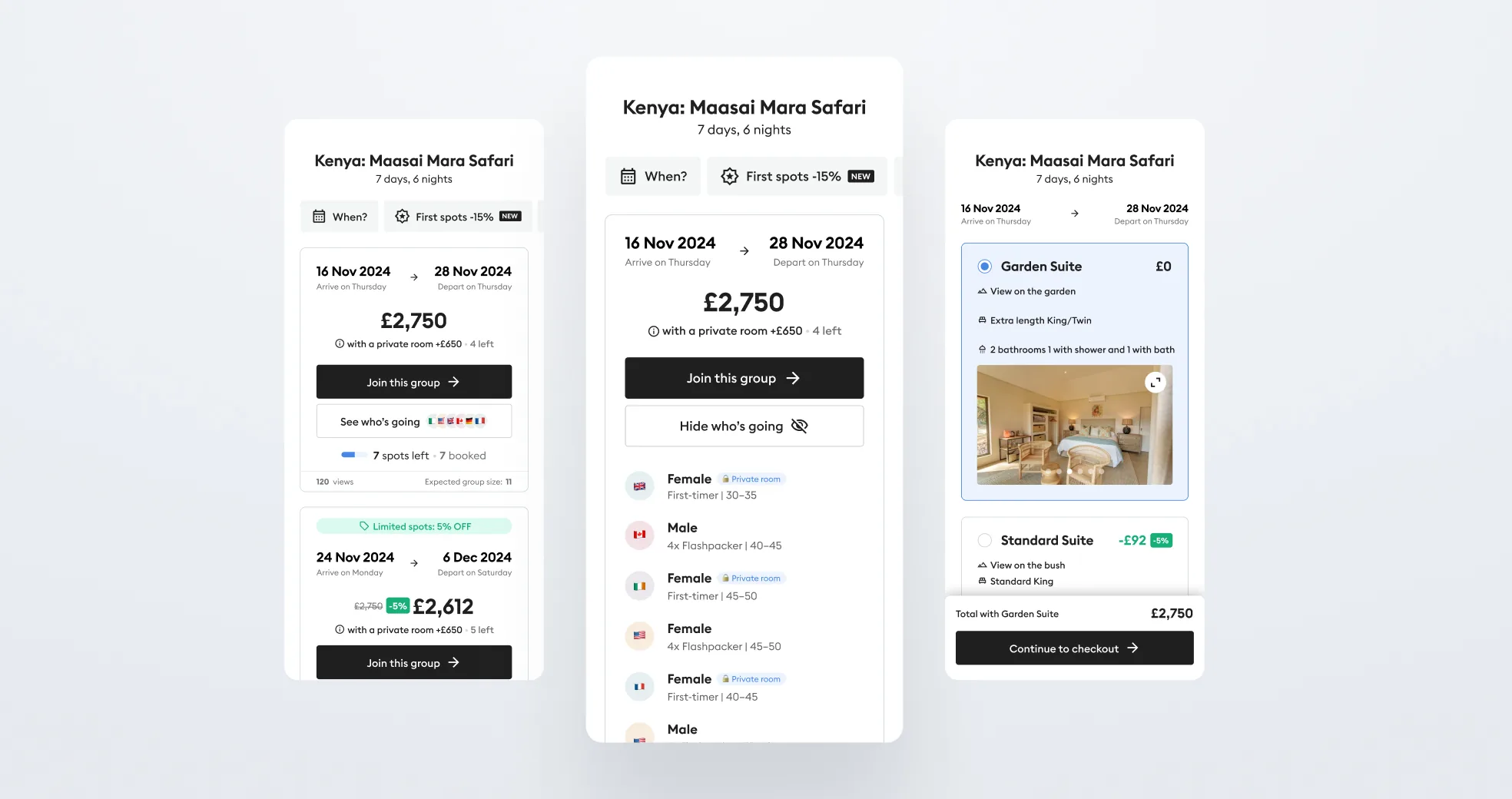
So I set the direction: surface a trustworthy picture of the group at the exact moment people hesitate, behind a lightweight signup. Enrich the UX flow people were already in with data the business already had, rather than bolt on something new.
A quick signup turned anonymous traffic into trackable traffic. People browse on mobile and buy on desktop, so the journey used to break in between. Now it held end to end.
What I owned
I owned it end to end. First a feasibility read: which data we already collected, where it lived, how much we could show. Then UX and UI, prototyping, testing, and the handoff to engineers.
After launch I monitored adoption and user feedback, then shipped improved versions: better onboarding, anonymized age brackets, more trust signals like the Pack Leader's profile. Each time watching how conversion moved.
+500% new account creations in the first week proved this was the silver bullet. Weeks later, competitors copied it.
What changed

new account creations sitewide, driven by the feature.
of visitors to the dates page used the gated unlock.
of people who unlocked went on to book the trip.
Repeated A/B tests and rounds of anonymization to strike the balance between transparency and trust.
Not a novelty spike, but a sustained conversion lift in the months after launch.
Competitors copied the pattern. The clearest sign the insight was structural.

Lead Product Designer
Oct 2023 – Present · 3 years
 Led product design across product, growth and brand, from research to shipped experiments
- Scaled research discovery with AI-assisted tools, turning insight into experiments
- Built AI and no-code workflows that cut the time from idea to live test
- Established and scaled a design system and interaction guidelines
- +39%conversion growth in four months of rapid experimentation
- +56%paid landing page conversion, in a single day
- 2xconversion rate, by replacing standard browsing with a product quiz